Showing posts with label pasture. Show all posts

Friday, November 16, 2012

Upcoming Event - Feeding Sheep and Goats Webinar Series

Purdue Extension will present a webinar sereis to educate goat and sheep farmers on feeding practices following the drought, managing forage shortages and the production of commercial versus show goats.

The webinars will run 6:00-8:00 PM (CST) on Nov. 28 and Dec. 5 at various Extension county offices in Indiana, Ohio and Kentucky.

Goats and sheep are small ruminants, so they rely on forage-heavy diets. Indiana's extreme heat and drought this spring and summer greatly reduced forage supplies. Those challenges, combined with a growing interest in sheep and goat production, are the impetus behind the webinars.

"We'll be talking about what this year's drought did to pastures and the lack of feed for farmers," said Mark Kepler, Purdue Extension educator in Fulton County and webinar organizer. "More and more farmers are starting to raise goats and sheep because they require less space and maintenance than larger farm animals. We're gearing this program toward those who are novice or beginners, but the information is really important to all sheep and goat producers."

The Nov. 28 session will cover dealing with forage shortages and feeding sheep and goats following drought.  

The Dec. 5 session will cover pasture management for 2013 and differences between raising show goats and commercial goats. 

Current Purdue Extension county offices signed up to host the webinars are Brown, Dubois, Elkhart, Fulton, Hancock, Harrison, Hendricks, Huntington, Jasper, Jefferson, Kosciusko, LaPorte, Montgomery, Morgan, Owen, Spencer, Switzerland, Vermillion and Warrick.

The Spencer County location will be held at the Spencer County 4-H Fairgrounds in Chrisney, IN. The series is free-of-charge but pre-registration is requested by November 26. To register, contact Purdue Extension-Spencer County at (812) 649-6022 or nheld@purdue.edu

More information about the webinar series is available on the Purdue Extension-Spencer County website at www.extension.purdue.edu/spencer.

Wednesday, October 3, 2012

Fall Frost Increases Potential for Prussic Acid Toxicity in Livestock

Fall frost is an annual concern for livestock producers because of the potential for prussic acid poisoning, but the potential for toxicity in livestock is of wider concern this year because of drought, an Ohio State University Extension forage specialist says.

The drought of 2012 has been one of the worst on record, leaving many livestock producers short on hay and silage supplies. The lack of substantial rainfall, extreme heat and dryness left many producers looking for any alternative forages they could plant to make up for the shortages, Mark Sulc said.  <Read More> 

Tuesday, August 14, 2012

Upcoming Events - Weeds, Cattle, and Grazing

There are a number of Extension-sponsored events in the local area coming up over the next few weeks that may be of interest to you.  Details of a few are listed below.  If you have any questions or need more information on any of them, please contact the person listed under each event.

Weed Watcher Training
September 4 & 11, 6 to 9 PM
September 8, 8 AM to 12 Noon
September 15, 8 AM to 2 PM 
(all times EDT)

Southern Indiana Purdue Ag. Center
11371 E. Purdue Farm Rd.
Dubois, IN

Registration Fee - $40 per person

This program provides hands-on training to help participants identify and survey invasive weeds on their property or in their community and learn what can be done to stop their spread.  The training will culminate in planning and completing a service project that includes surveying invasive weeds in the community.

For more information, contact Purdue Extension-Orange County at (812) 723-7101.


Harrison County Cattlemen's Field Day
The Harrison County Cattlemen’s Association would like to invite you to a field day, September 8th, 2012, at Chad and Paige Baker’s Farm, J-Max Cattle, in Laconia, IN. The field day will begin with registration at 9:00 AM EDT at the Laconia cattle backgrounding operation followed by a tour of the facilities.

There will also be an extensive discussion on mortality composting as an alternative to sending animals to the rendering plant. Our keynote speaker will be Dr. Dale Rozeboom from Michigan State University, who works to provide statewide and national leadership in food animal production and environmental sustainability.

Lunch will be served after the morning tour, including beef cooked by the Cattlemen’s Association members. The afternoon session will include presentations that qualify for private applicator license credits as well as CCH credits.

The fee to participate in this day is just $10 and includes your meal and lots of information and contacts about cattle production. If you would like private applicator credits, it’s an additional $10 (don’t forget to bring your license with you!). The deadline to register is August 24th, after this day a late fee of $5 will be added. Contact the Harrison County Purdue Extension Office to register for the event at 812-738-4236 or mulery@purdue.edu . The day is also sponsored by Harrison County Farm Bureau, Harrison County Soil and Water Conservation District, Purdue Extension Services, Jacobi Sales, Chinn’s Equipment, Deere County, and Farm Credit Services. Purdue University is an affirmative action/equal opportunity institution. If you need special assistance to participate in this program, please contact the extension office prior to the program.


Grazing 102
September 14, 9:00 AM to 6:00 PM
September 15, 8:00 AM to 4:30 PM
(all times EDT)

Southern Indiana Purdue Ag. Center
11371 E. Purdue Farm Rd.
Dubois, IN

Registration Fee - $65 per person ($30 per person for each additional person from the same operation, share reference materials)

This program is geared towards anyone involved in grazing that wants to understand some of the fundamentally important concepts to make a Management Intensive Grazing program work in their operation. 

A flyer and registration form is available here.  For more information, contact Margie Zoglmann at (812) 547-7084 or mzoglmann@purdue.edu 

Monday, August 13, 2012

Upcoming Events - Livestock and Forage Drought Management Update

The drought of 2012 has presented some unique challenges to livestock producers with regards to forage supplies and pasture condition. Purdue Extension of Dubois, Perry, Spencer, and Warrick Counties is presenting a Livestock and Forage Drought Management Update to discuss these challenges and identify management tips for this year and beyond. Specific topics include Utilizing Alternative Feeds and Forages, Forage Nitrate and Nutrient Testing, Herd Management and Feeding Techniques, and Pasture Renovation. Featured speakers will include Dr. Keith Johnson, Purdue Extension Forage Specialist and Dr. Ron Lemenager, Purdue Extension Beef Specialist.

The update will be held August 16 at 6:30 PM CDT at the St. Meinrad Community Center. The update is free-of-charge but pre-registration is requested by August 13. For more information, or to register, please contact the Spencer County Purdue Extension Office at (812) 649-6022 or nheld@purdue.edu.

Tuesday, July 31, 2012

Forage Crops Could Provide Opportunities Following Corn

A wide range of forage crops could help grain and livestock producers salvage some value from their fields once the drought-ravaged corn crop has been harvested - if soil moisture returns to a level that can support plant growth.

While damaged corn can be used as forage to feed livestock, it won't be enough to thwart forage shortages. Several forage crops are available for Indiana growers to plant in late summer or early fall, and that could serve as livestock feed in the spring.

"For the August seeding, an excellent consideration would be spring oat that will be harvested by machine, or a combination of spring oat and forage turnip if grazed by livestock," said Keith Johnson, Purdue Extension forage specialist. "Spring oat will not survive the winter.

"While the expectation is for turnips to winterkill, too, it has been observed that they can survive a mild Indiana winter."

Another possible choice is annual ryegrass, but growers who go this route need to pay close attention to keep the crop from becoming a nuisance. Johnson recommended an early seeding to have both fall and spring harvests.  <Read More>

Thursday, July 12, 2012

Purdue Extension Drought Press Conference

On July 5, Purdue Extension held a drought press conference at the Indiana State Fairgrounds.  Extension Specialists and Educators addressed a variety of drought-related topics and answered questions from media.  To view the press conference, please see the video link below:


A news release highlighting the topics of discussion at the press conference is also available here.

Monday, May 21, 2012

Poison Hemlock - A Mini Review

Travis Legleiter and Bill Johnson – Purdue Extension Weed Science Specialists

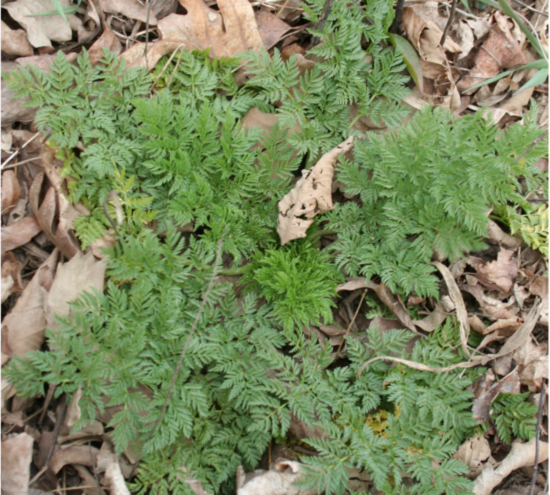
We have received a couple of calls on poison hemlock this spring with concerns of its presence in the Indiana landscape. The appearance of poison hemlock on roadsides and fencerows of Indiana is not new, but the weed may be more prevalent this year as it came out of winter dormancy and has been rapidly growing since the unusually warm days of early March. I myself noticed it being one of the first plants to green up in the roadside ditches this winter as I traveled the state (Image 1). The presence of this weed is not new in Indiana as I can find articles in the Purdue weed science database back to 2003 on the subject of poison hemlock. The largest threat of this weed is the toxicity of it’s alkaloids if ingested by livestock or humans, but it can also be harmful to aesthetic values and has been reported to creep into no-till corn and soybean fields as well.


Image 1. Photo of a green and growing poison hemlock plant in a roadside ditch taken on March 7, 2012 in central Indiana.
Biology and Identification
Poison Hemlock is a biennual weed that exists as a low growing herb in the first year and bolts to three to eight feet tall in the second year and produces flowers and seed. It is often not noticed or identified as a problem until the bolting and reproductive stages of the second year. The alternate compound leaves are pinnate (finely divided several times) and are usually triangular in outline. Flowers are white and occur in an umbel inflorescence. Poison hemlock is often confused with wild carrot but can be distinguished by its lack of hairs and purple blotches that occur on the stems.

Toxic Properties
Poison hemlock contains five alkaloids that are toxic to humans and livestock if ingested and can be lethal. All parts of the plants contain the toxic alkaloids with levels being variable throughout the year. Symptoms of toxicity include nervousness, trembling, and loss of coordination followed by depression, coma, and/or death. Initial symptoms will occur within a few hours of ingestion.

Cases of poisoning due to poison hemlock ingestion are rare as the plants emit a mousy odor that makes it undesirable and unpalatable to livestock and humans. Consumption and toxicity in animals usually occurs in poorly managed or overgrazed pastures where animals are forced to graze poison hemlock.

Control
Control of poison hemlock with herbicide is most effective when applied to plants in the first year of growth or prior to bolting and flowering in the second year. The closer to reproductive stages, the less effective the herbicide. In roadside ditches, pastures, and waste areas, herbicides containing triclopyr (Remedy Ultra) or triclopyr plus 2,4-D (Crossbow) are most effective in controlling poison hemlock. Other herbicides that provide adequate control when applied at the proper timing are dicamba (Clarity, Banvel), metsulfuron-methyl (Cimarron, Escort XP), metsulfuron-methyl plus dicamba (Cimarron Max) and clopyralid plus 2,4-D (Curtail).

For information on control of poison hemlock in corn and soybean please refer to a previous Purdue Weed Science article: Poison Hemlock Control in Corn and Soybeans.

For further information on toxic plants in Indiana refer to the Purdue University Weed Science Guide to Toxic Plants in Forages

Wednesday, May 9, 2012

Buttercup Bonanza

Buttercup in pasture (The Buttercups of Indiana)
Does your pasture or barn lot look like this?  If so, you likely have an influx of buttercup; and you are not alone.  This weed has been very prevalent in area pastures this spring, due at least in part to a mild winter and early spring. 

The name buttercup is actually a common name associated with approximately 20 different weed species that are found in Indiana.  To complicate matters further, petal number and leaf appearance can vary within the same species, occasionally making exact identification difficult. 

The main concern with buttercup, regardless of species, is its toxicity to livestock.  While the amount required to be consumed to cause poisoning symptoms varies among species, all have the potential to cause drooling, diarrhea, weakness, bleeding, etc.  The good news is livestock rarely consume the weed, especially if there is an adequate supply of desirable forage.  Also, buttercup toxicity does not carry through to hay crops due to the break down of the toxins as the hay dries. 

Control of buttercup can be accomplished through a combination of soil testing/soil amending, mowing, and herbicide applications.  Additional information on buttercup biology and control, including specific herbicide recommendations, can be found in the Purdue Weed Science bulletin, The Buttercups of Indiana.          

Wednesday, February 15, 2012

Mild Winter Effects on Alfalfa and Hay Fields

The current mild winter has many wondering what effect this will have on pest populations in a variety of home and agricultural situations.  Dr. Lee Townsend of the University of Kentucky addressed this concern as it relates to hay and pasture production in the February 14th issue of the Kentucky Pest News.  The full newsletter and Dr. Townsend's article are available here